Internal grinding
Internal Grinding Machines: How Bore Grinding Works and Which Machine to Use
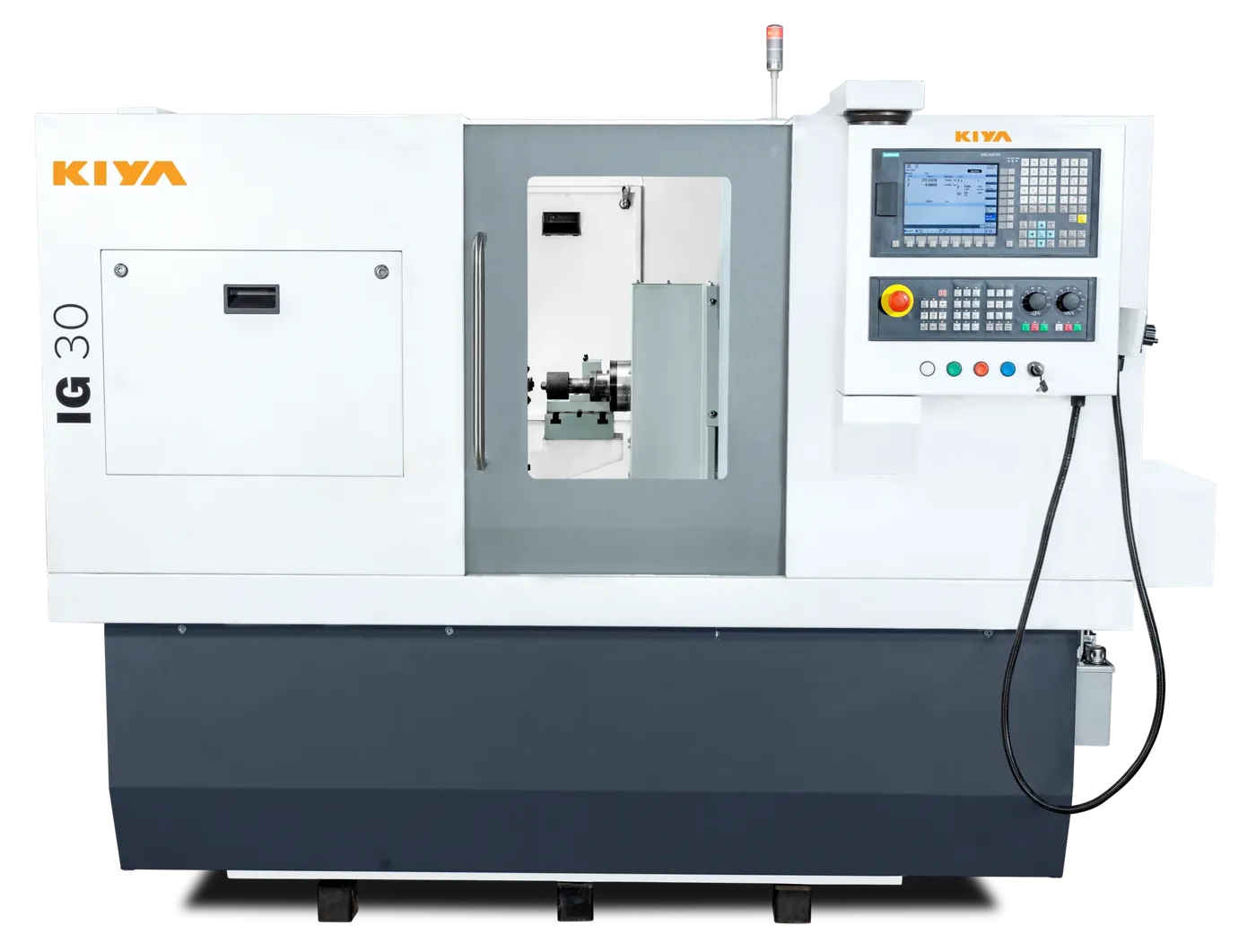
Internal grinding finishes bores with a small wheel on a long quill inside a rotating workpiece. Because the wheel and quill are small and slender, rigidity and wheel speed limit accuracy and productivity. Use a standard internal grinder (KIYA IG-30) for bores up to Ø280 × 80 mm, a long-bore grinder (IGL) for deep bores, and a hybrid ID/OD grinder (INEX-40) when bore and OD must be concentric.
Bores are harder to grind than outside diameters. The wheel must be smaller than the hole, so it runs on a long, slender quill at very high speed, with little room for coolant and chips. Getting a round, straight, well-finished bore is about managing those constraints.
How internal grinding works
The workpiece is held in a chuck or fixture on the workhead and rotated. An internal wheelhead carries a small wheel on a quill into the bore and reciprocates along it (or plunges) while feeding outward to size. The wheel is dressed regularly to keep it true.
What limits bore grinding
- Quill stiffness — the longer and thinner the quill, the more it deflects, causing taper and bell-mouth.
- Wheel speed — small wheels need very high rpm to reach effective surface speed; high-frequency spindles help on small bores.
- Coolant access and chip removal inside the bore.
- Work holding — chucking distortion on thin rings shows up directly in the bore.
Three machine choices
| Need | Machine | KIYA capacity |
|---|---|---|
| Standard bores in rings, gears, bushes | CNC internal grinder | IG-30: Ø16–Ø280 mm, up to 80 mm deep |
| Deep bores in long parts | Internal long-bore grinder | IGL-400/550: Ø60–Ø180 mm, 200 mm deep, parts to 550 mm long |
| Bore + OD + face concentric | Hybrid ID/OD grinder | INEX-40: ID Ø30–Ø300 × 300, OD to Ø400 |
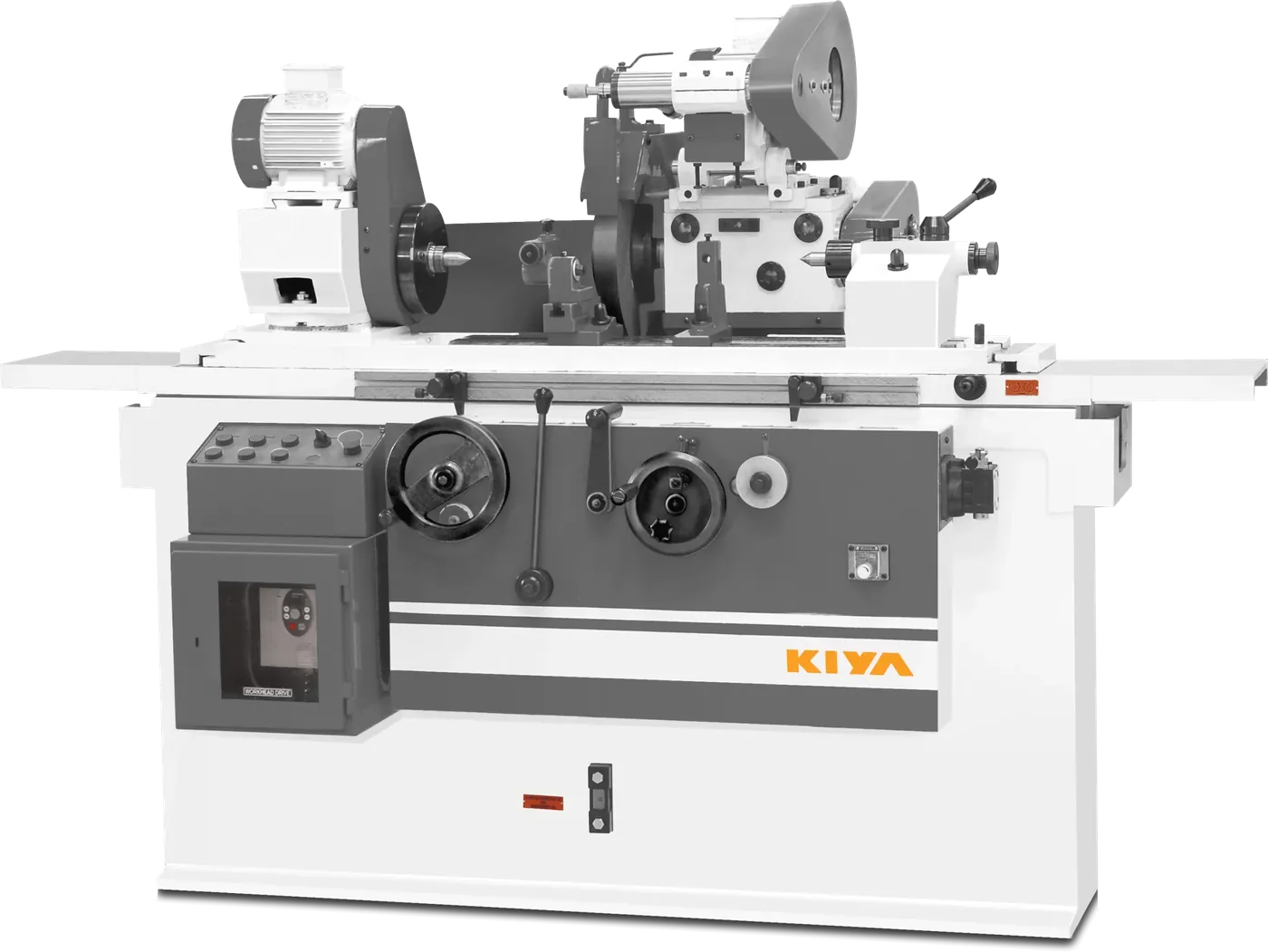
| Small bores, tool room | Hydraulic internal grinder | HCG-I: ID Ø12–Ø100 mm |
Bearing-ring bores: a special case
Bearing makers grind millions of ring bores a year. That is why SOLCO developed the IG-30 for the bearing industry in 2005 — and why it remains one of KIYA’s most successful machines. For ring raceways, the EBG-120 track grinder complements it.
Tips for better bores
- Use the shortest, stiffest quill that reaches the full bore length.
- Dress frequently with a sharp dresser; let the CNC compensate.
- Use soft-jaw or diaphragm chucks on thin rings to avoid distortion.
- Direct coolant into the bore, not just at the entry.
Frequently asked questions
What is the bore range of the KIYA IG-30 internal grinder?
Ø16 mm (40 mm deep) to Ø280 mm (80 mm deep), within a Ø300 mm swing.
When should I use a hybrid ID/OD grinder instead of an internal grinder?
When the bore and outer diameter (or face) must be tightly concentric or square to each other — grinding them in one chucking avoids re-clamping errors.