Buying guide
CNC vs Hydraulic Cylindrical Grinding Machine: Which Should You Buy?
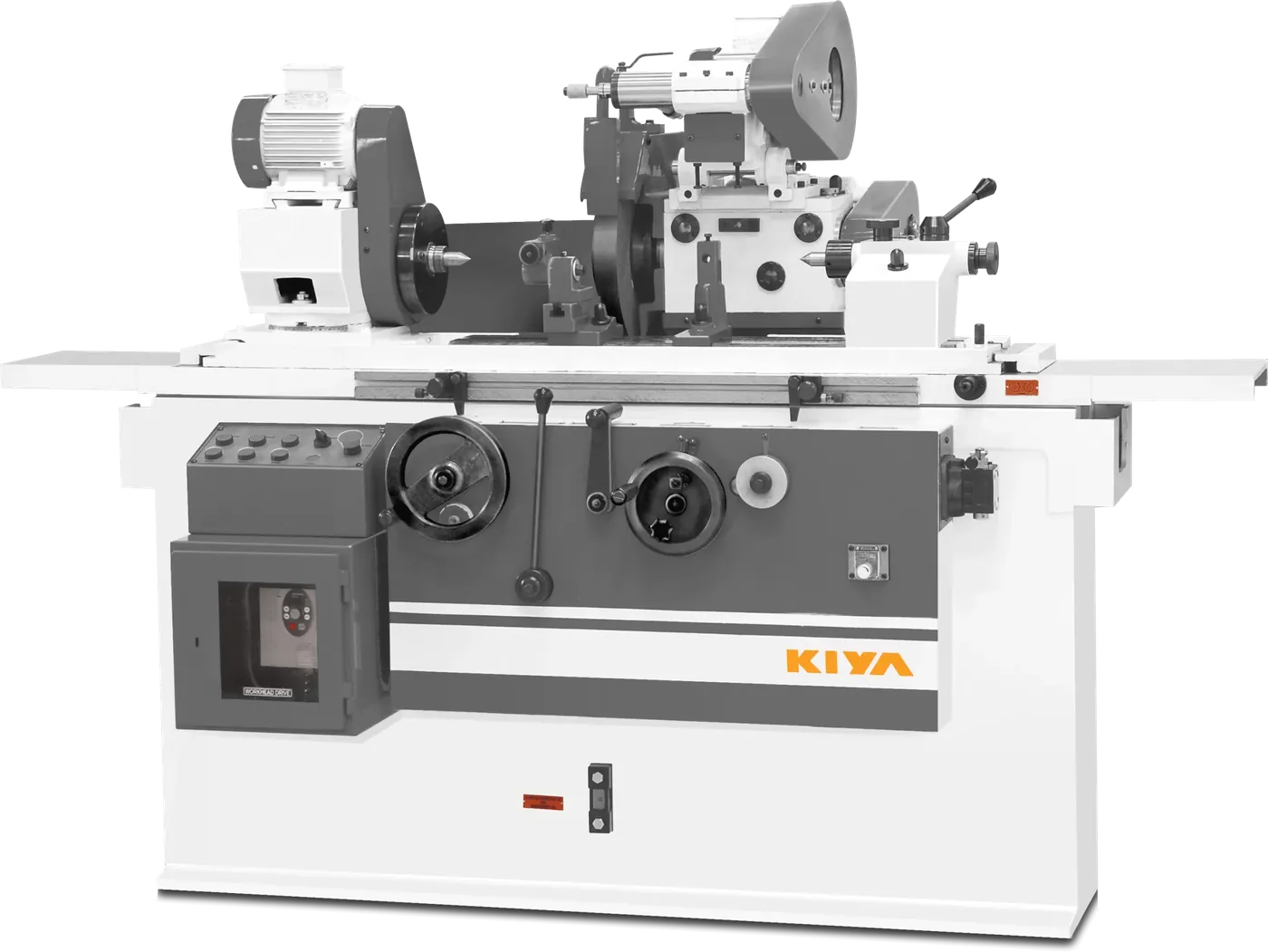
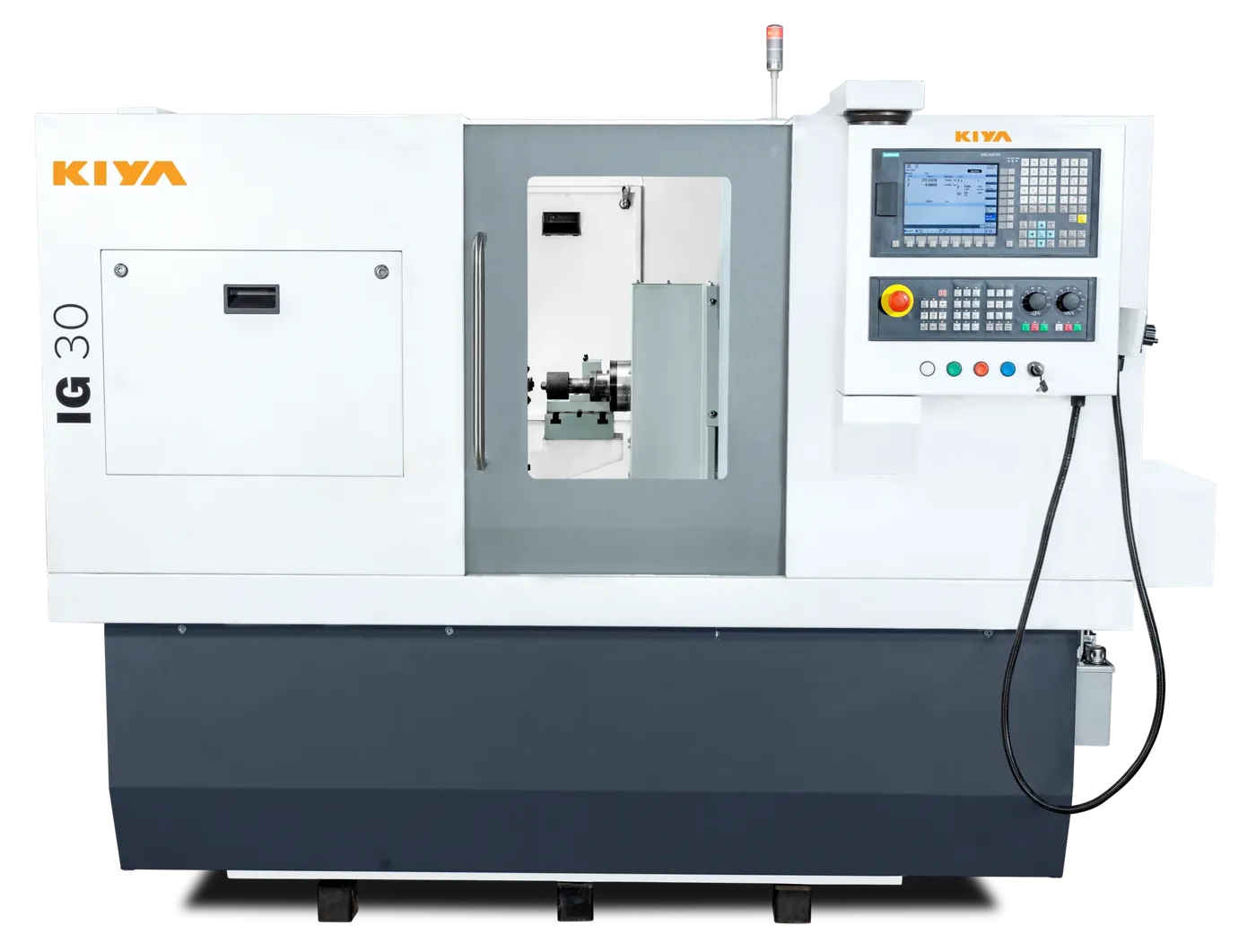
Hydraulic cylindrical grinders (like the KIYA HCG) are economical and flexible, ideal for tool rooms and varied small batches. CNC cylindrical grinders (like the KIYA EG/AG) cost more but deliver repeatable, automated cycles for production. A hydraulic grinder with single-axis CNC in-feed is a cost-effective middle path.
Both machines grind the same diameters. The difference is in how the grinding cycle is controlled — and that decides productivity, consistency and cost.
How a hydraulic cylindrical grinder works
A hydraulic system drives the table back and forth (traverse), with adjustable speed and reversal stops. In-feed is by handwheel or a semi-automatic mechanism. The operator sets up, grinds and measures. KIYA’s HCG Series — the SOLCO benchmark since 1995 — uses a hydrodynamic wheel spindle and hand-scraped V-flat guideways for smooth, vibration-free traverse.
How a CNC cylindrical grinder works
Servo motors drive the X (in-feed) and Z (traverse) axes through ball screws. The controller runs the full cycle, dresses the wheel and compensates for wear, and can grind several diameters, shoulders and tapers in one program. KIYA’s EG/AG Series adds an angular-wheelhead option for grinding shoulders and diameters in one plunge.
Side-by-side comparison
| Factor | Hydraulic (HCG) | CNC (EG/AG) |
|---|---|---|
| Capital cost | Lower | Higher |
| Set-up for a new job | Fast and flexible | Program once, then fast |
| Repeatability across shifts | Depends on operator | Program-controlled |
| Multi-diameter / profile parts | Slower, several set-ups | One cycle |
| Operator skill needed | High | Moderate |
| Automation | Limited | Loaders, gauges, data |
| Best fit | Tool room, job shop, maintenance | Production, OEM supply |
The middle path: single-axis CNC
Many shops need better consistency than manual in-feed but don’t need full two-axis CNC. KIYA’s HCG is available with single-axis CNC on the in-feed — repeatable sizes with the simplicity and lower cost of a hydraulic machine.
How to decide
- Mostly one-off and small-batch work, skilled grinders on staff → hydraulic.
- Same parts every month, several diameters, multiple shifts → CNC.
- Consistent diameters on simple parts, tight budget → hydraulic with single-axis CNC.
Not sure? Send us a drawing — we build both, so our recommendation is about your part, not our product.
Frequently asked questions
Is a hydraulic cylindrical grinder accurate enough for production?
For many parts, yes — accuracy comes from the machine’s structure and spindle. What CNC adds is repeatability without depending on operator skill, and the ability to grind complex parts in one cycle.
Can a hydraulic grinder be upgraded with CNC?
KIYA offers its HCG hydraulic grinders with single-axis CNC in-feed as a factory option.